
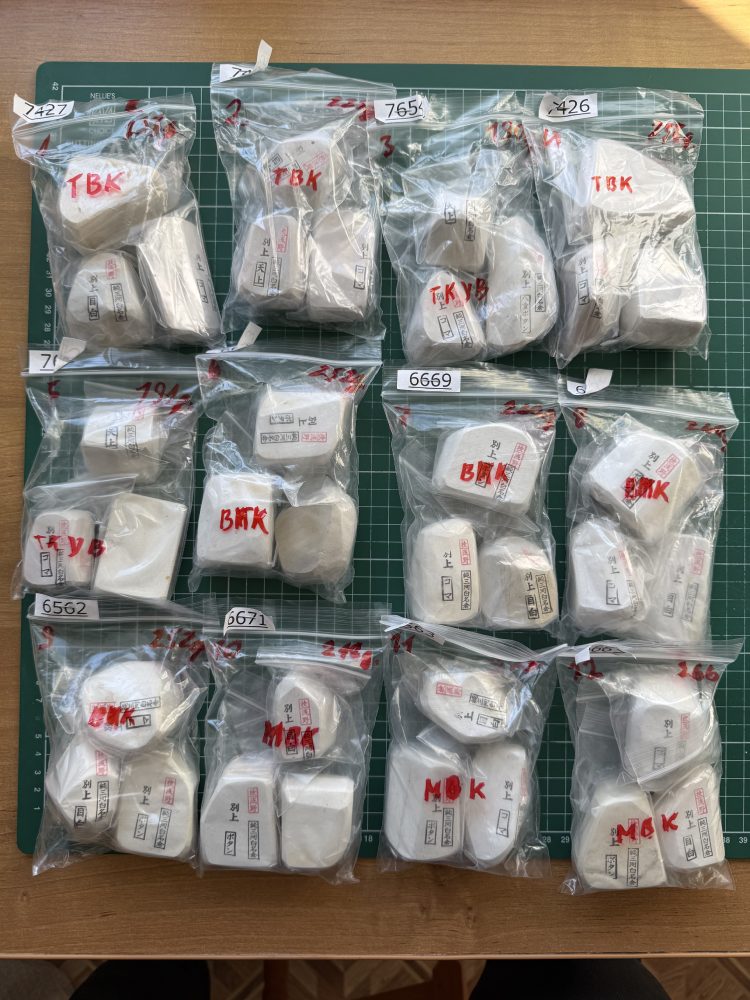
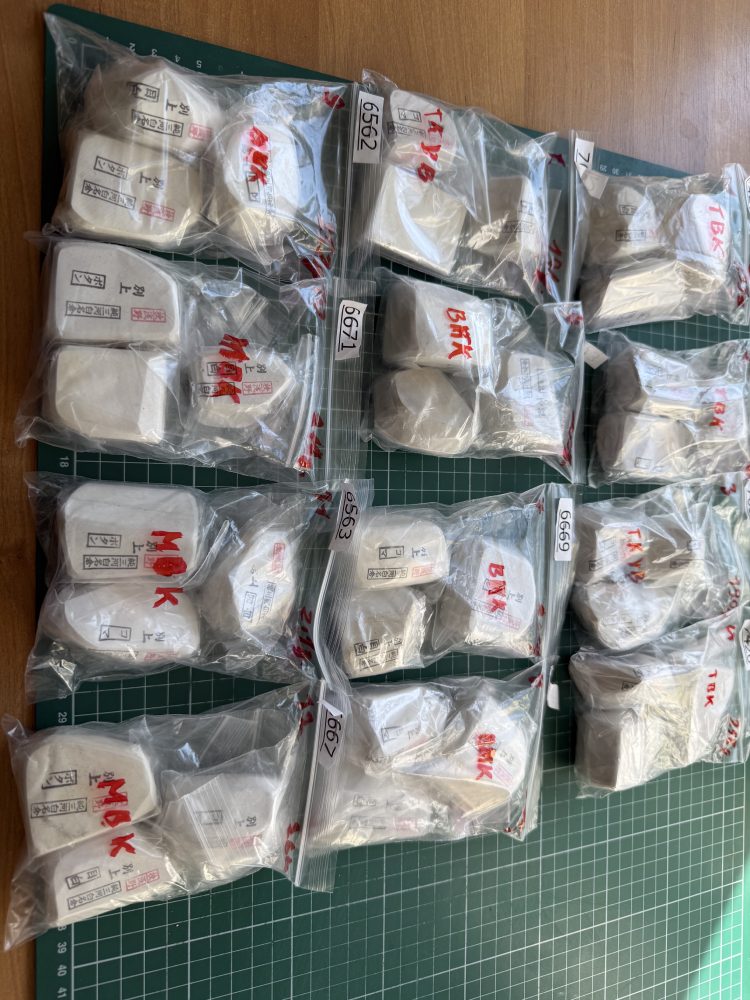
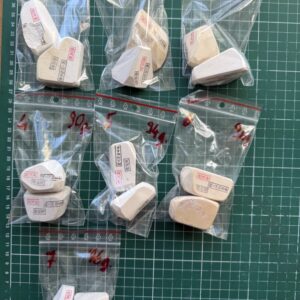
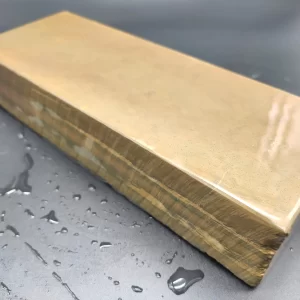
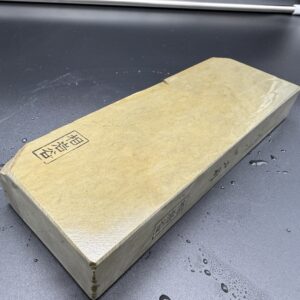
Like other naguras, Mikawa Asano is traditionally used to create an abrasive slurry on a natural whetstone. The difference from others is hon. Asano is an attempt to create a free grading system that will allow the user to choose a sharpening progression from coarse to fine.
The nail uspensia accelerates the work of slower natural stones, sharpens steel carbides and keeps tools sharper for much longer. It can also be used on synthetic stones, making them softer and cleaner. It is also possible to finish the razors on liquid suspension if you want a non-aggressive and safe shave.
In fact, one lap, any of them, is sufficient for sharpening, as the natural abrasive particles break down and become finer during sharpening. If necessary, the suspension can be created again using the same Mikawa nagura.
The exception to the rule is Muchi. The latter can be too rough in some cases and it is not advisable to use it for razors.
This type of stone is mined from the Junmikawa Shiro Mine in the Kitashitara District of Aichi Prefecture. The rock found there consists of 10 to 12 layers, depending on the area that has been excavated. Of these layers, there are 8 usable and 4 of them are the most popular. Areas with 12 usable layers include two different Tenjyo layers, as well as Yae Botan and Botan, which are very similar. As with all Japanese natural stones, each individual specimen may vary.
Mikawa nagura is graded from coarsest to finest as follows: Mushi [ムシ] > Ban [バン] > Atsu [アツ] > Yae Botan [八重ボタン] > Botan [ボタン] > Tenjyo [天上] > Mejiro [目白] > Koma [コマ]
Mikawa nagura are classified according to their speed of operation as follows: Ban > Koma > Yae Botan > Botan > Atsu >Tenjo > Mejiro.
After nagurs, sharpening is usually completed on the same clean stone that was the base. Some end the sharpening process of razors with a liquid suspension and in this way achieve a gentle and safe shave, because then the blade becomes non-aggressive to the skin, but cuts the hair.
Jun Mikawa Shiro Nagura types
| Japanese name | Kanji/writing | Description | Typical use |
|---|---|---|---|
| Coma | 駒 / コマ | The smallest and one of the most effective nagura in the Jun Mikawa Shiro series. Creates a very fine suspension. | Final round, razors and knives |
| Mejiro | 目白 | Very small, almost the size of a Coma. | Late polishing stage |
| Tenjyo (Tenjou) | 天上 | Balanced ratio of fineness to grinding power. One of the most versatile sharpeners. | Middle-late stage |
| Botan | 牡丹 | Good abrasive power, fairly active suspension. Always used with a base stone. | Early stage of nagura |
| Yae Botan | 八重牡丹 | Similar to Botan, but often a slightly softer and finer suspension. | Early-mid stage |
| Atsu | 厚 | A little rougher. | Sometimes used for rough work |
| Ban | 盤 | One of the roughest Mikawa nagura. | For coarse sharpening |
Quality classes:
- 別上 (Betsujō) - high quality
- 特級 (Tokkyū) - highest quality
Order of fineness (from smallest to coarsest)
| Detail | Type |
|---|---|
| 1 (smallest) | 駒 / コマ Koma |
| 2 | 目白 Mejiro |
| 3 | 天上 Tenjyo |
| 4 | 牡丹 Botan |
| 5 | 八重牡丹 Yae Botan |
| 6 | 厚 Atsu |
| 7 | 盤 Ban |
In practice, in particular in razor sharpening, a progression is commonly used:
牡丹 Botan → 天上 Tenjyo → 目白 Mejiro → 駒 Koma


 LT
LT EN
EN ES
ES FR
FR DE
DE IT
IT RU
RU PL
PL PT
PT RO
RO NL
NL
Reviews
There are no reviews yet.