
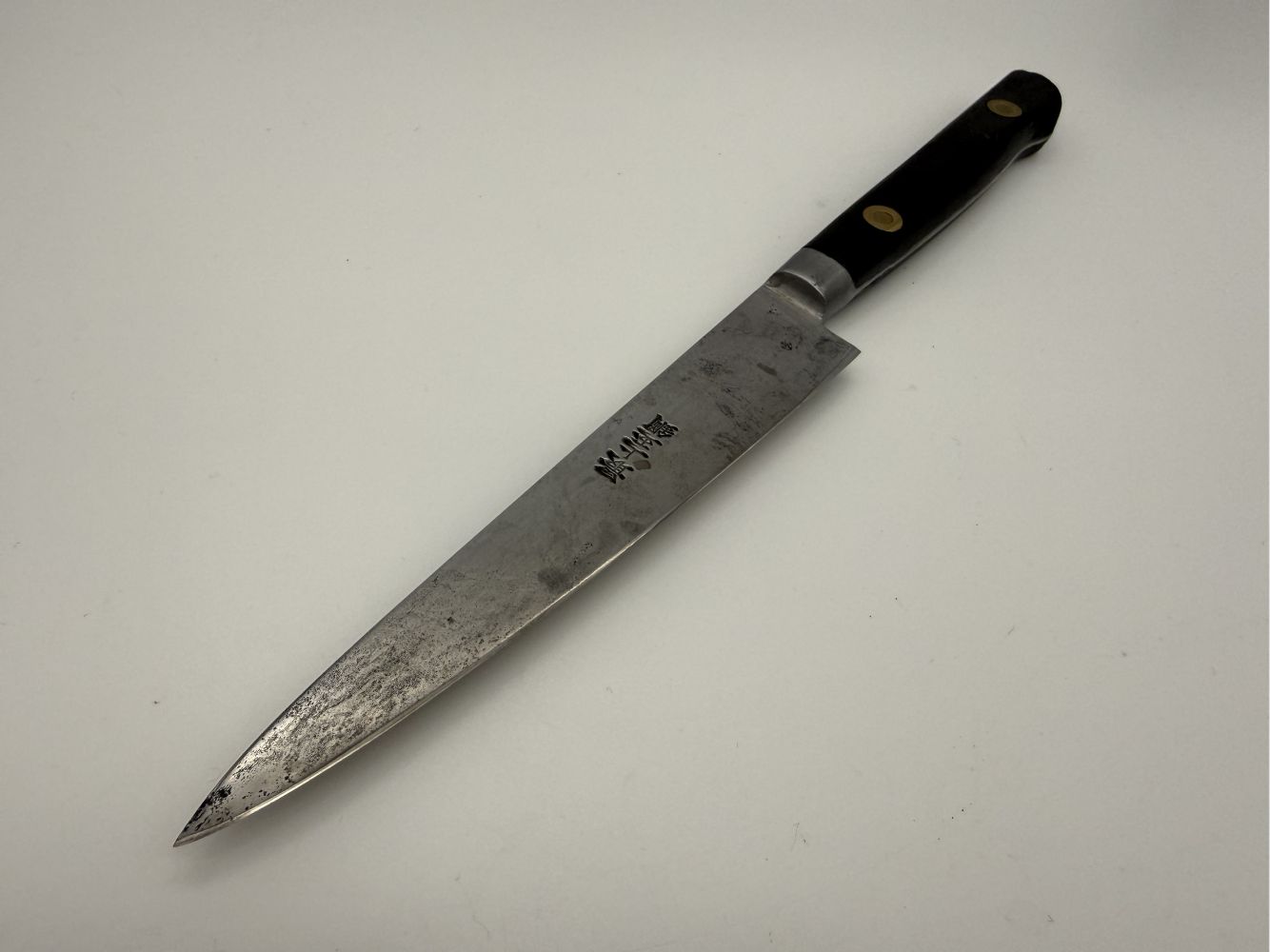
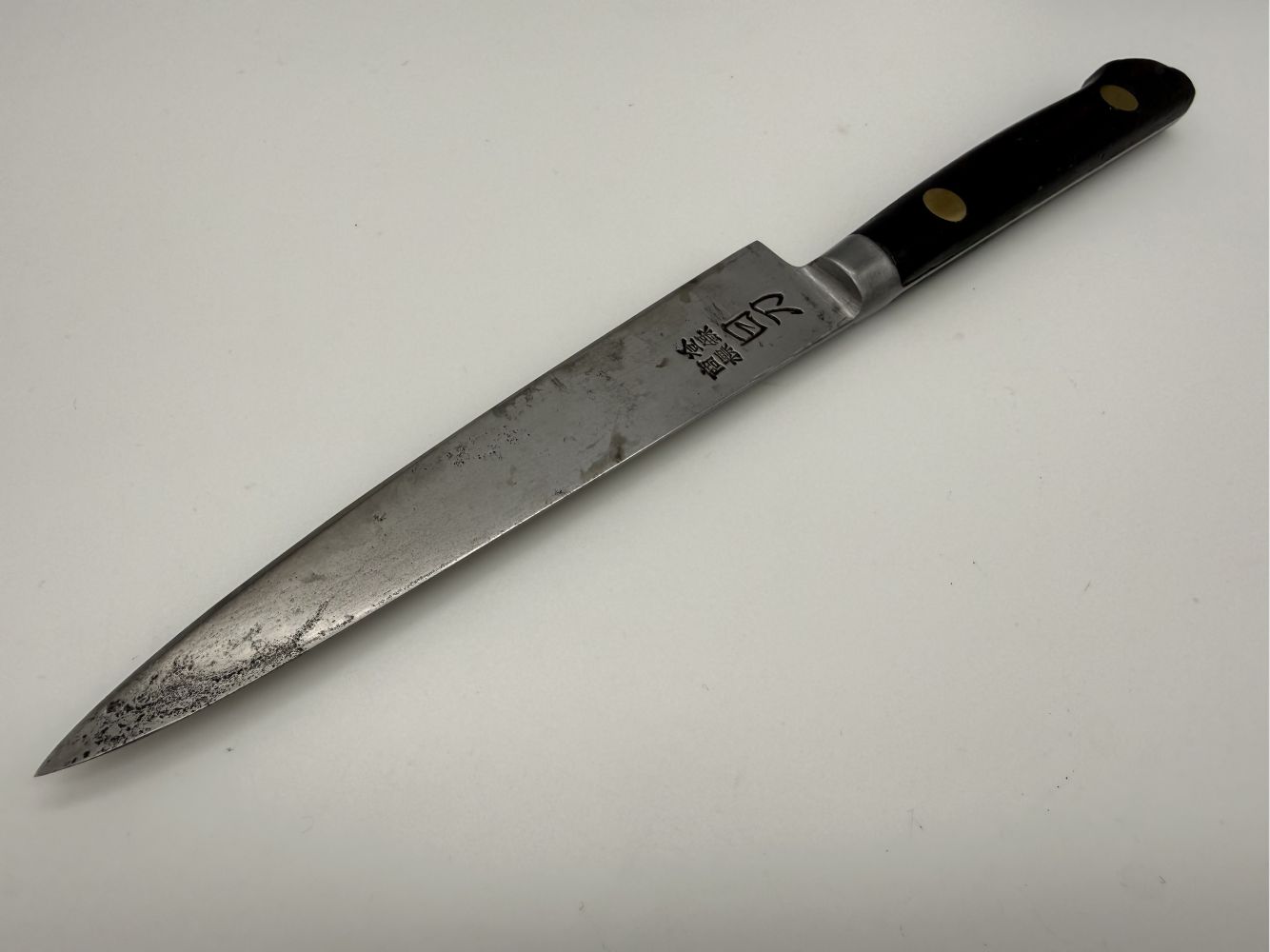
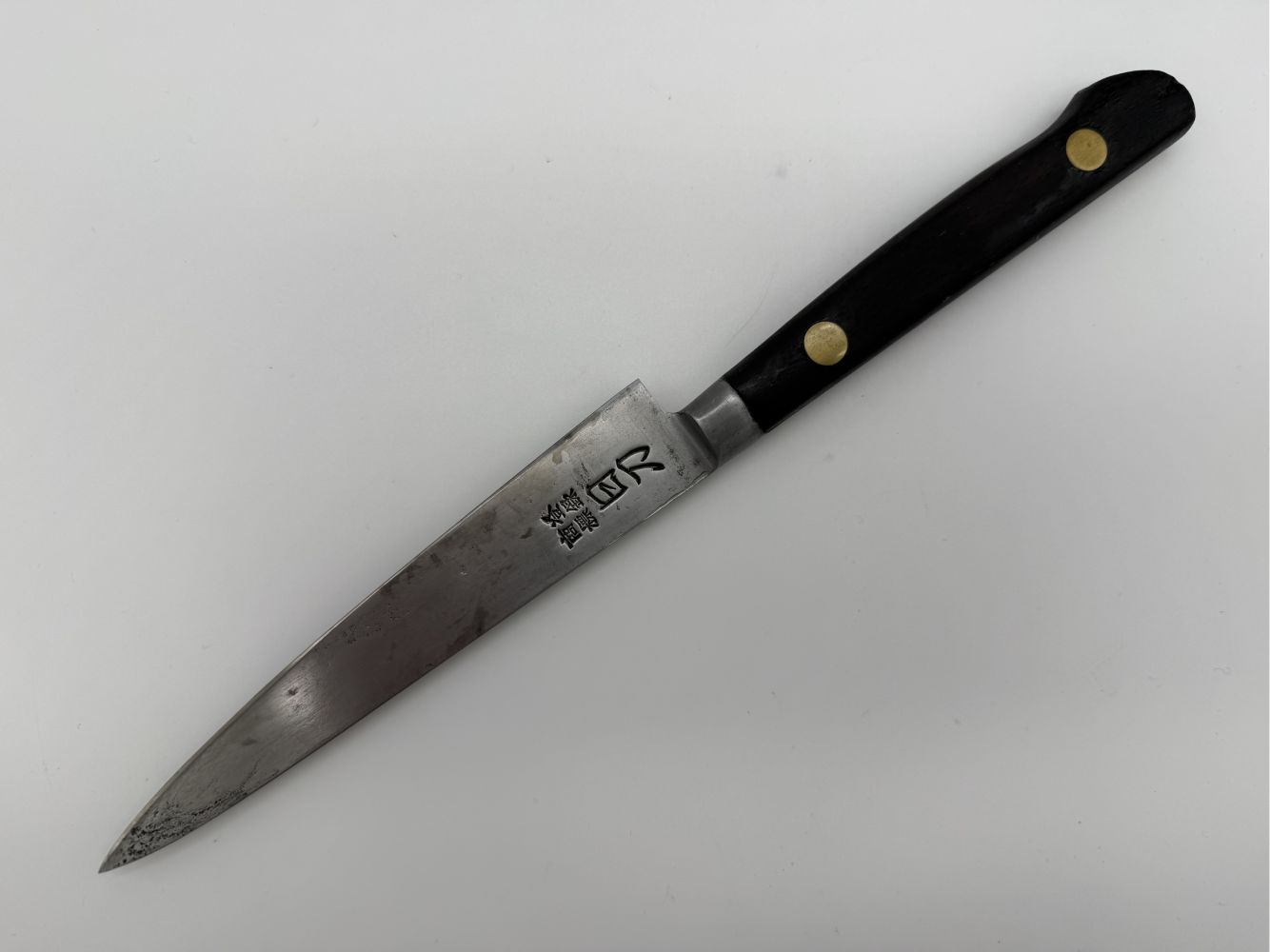
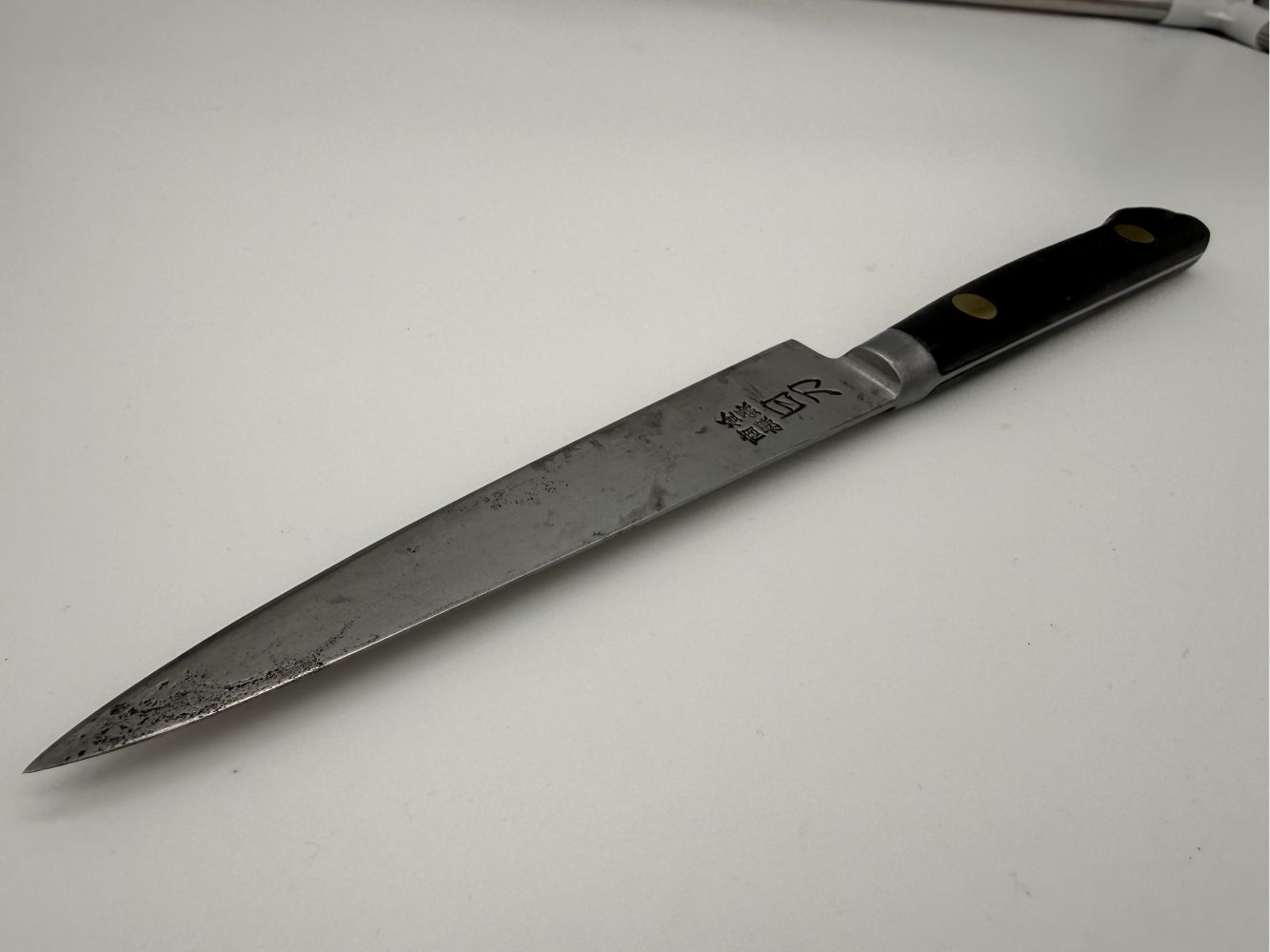
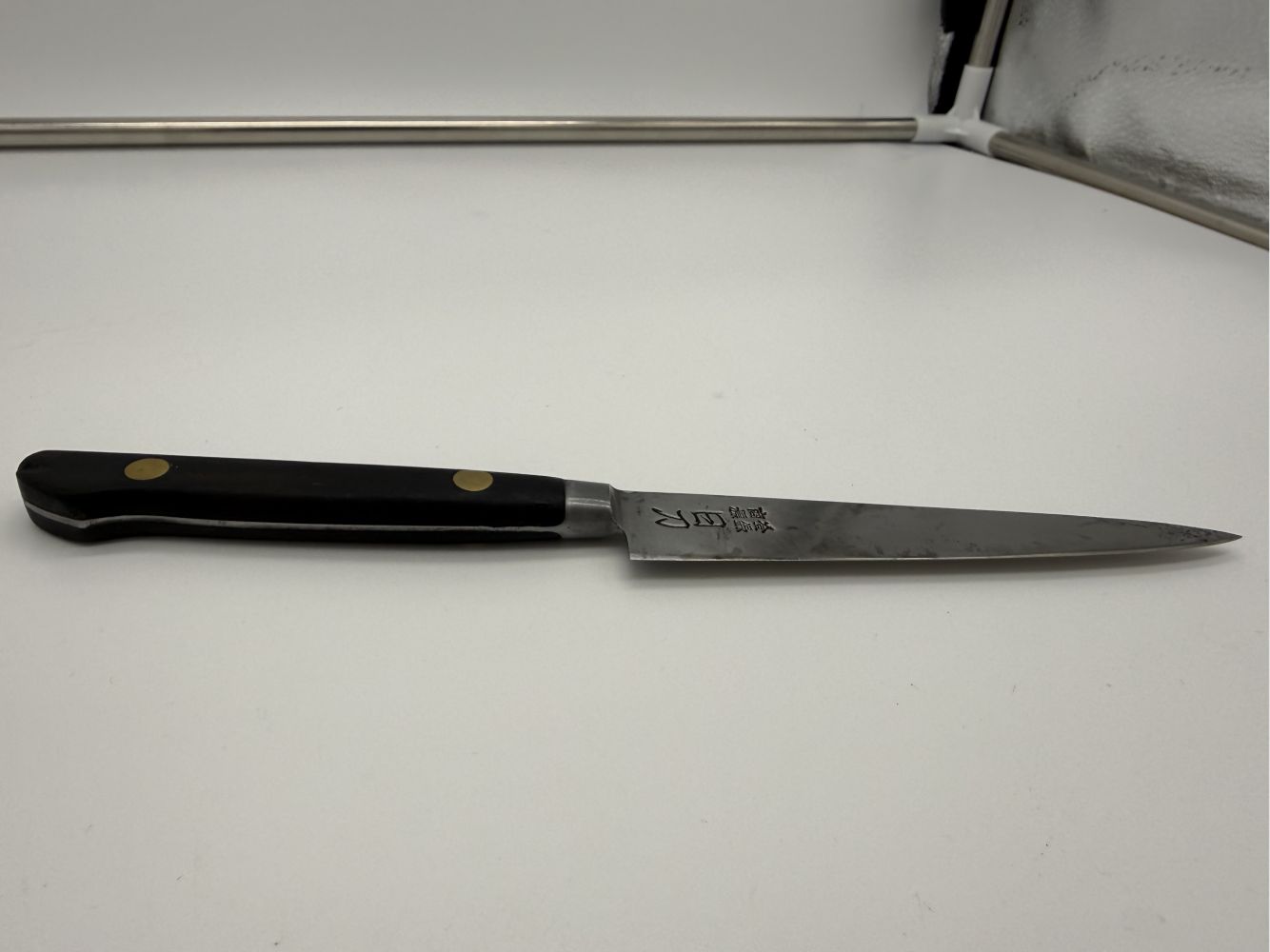
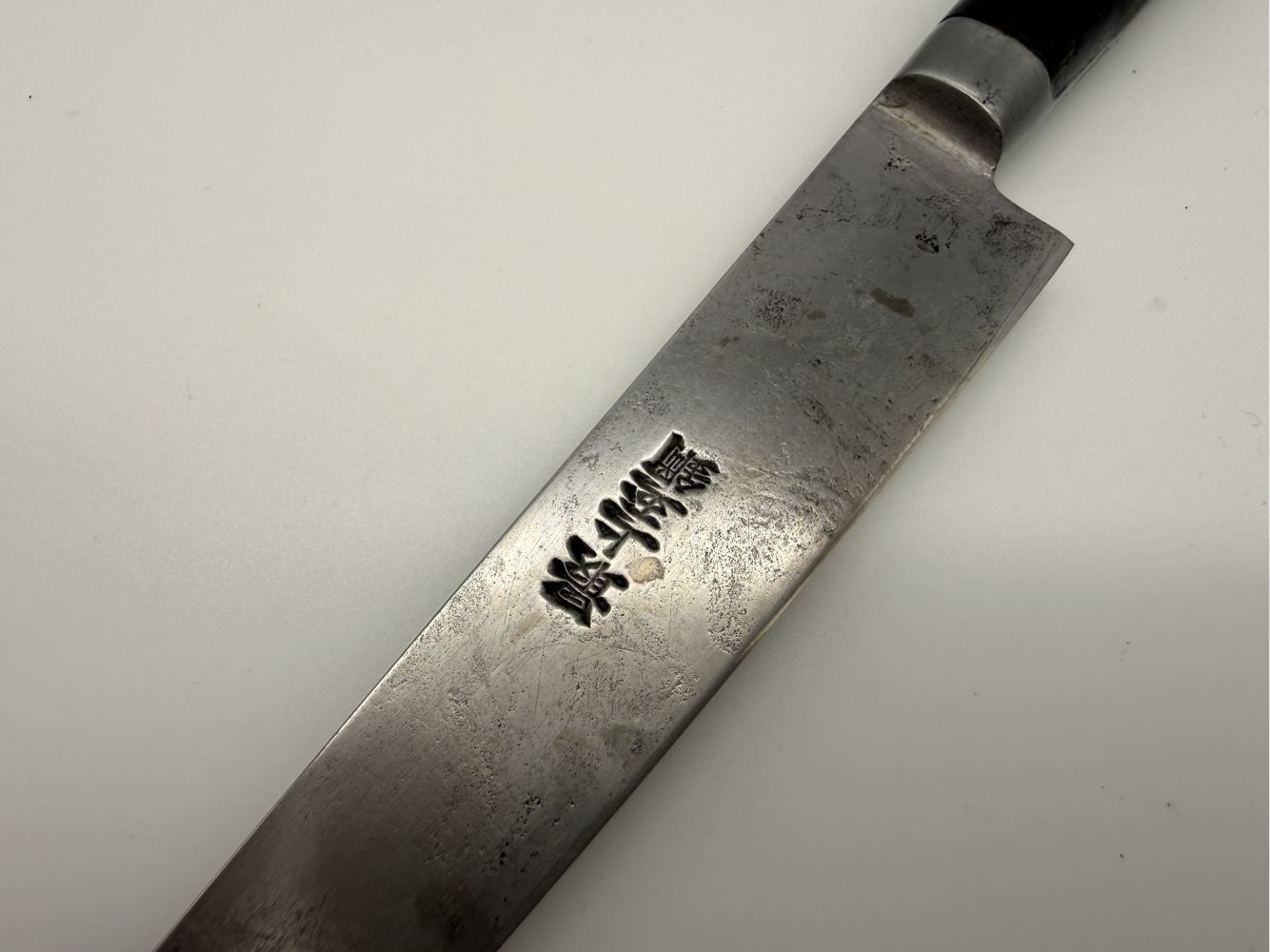
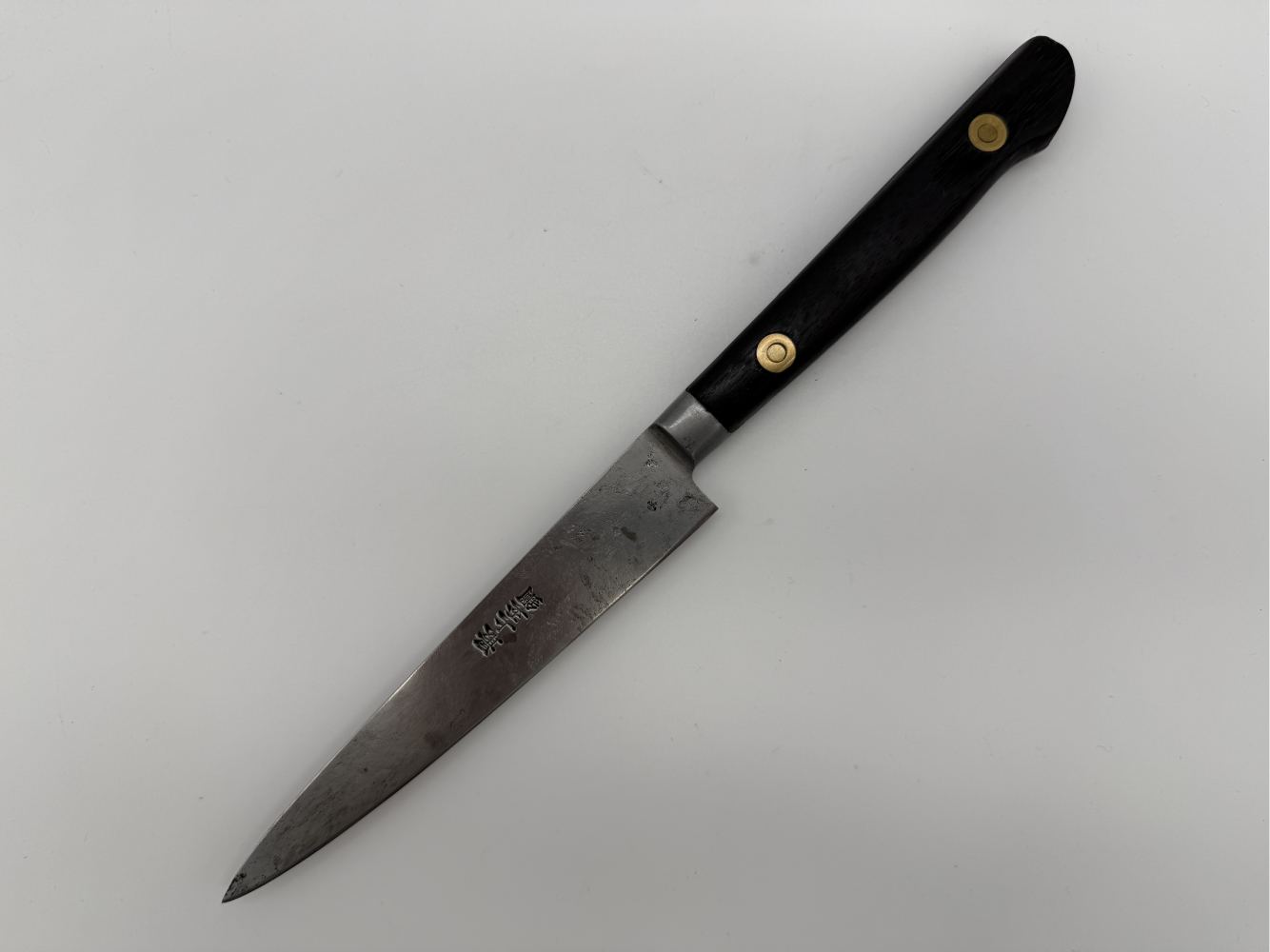
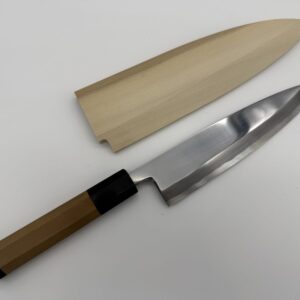
This is an authentic, hand-forged Japanese knife made of tamahagane type steel - the same traditional alloy that has been used in Japan for centuries to forge samurai swords (nihonto). The blade is marked with characters:
- 最上手鋼 - „premium steel“
- 鋼舟鍛作 - „forged by Master Kōshū“
This marking clearly indicates that the knife is made in the classic Japanese tradition of blacksmithing, where the metal is not only shaped, but also „matured“ through a long cycle: repeated forging, thermal ageing and final finishing with natural stones.
🔥 Tamahagane - the steel from which the katana is born
Tamahagane is a traditional Japanese steel melted in a „tatara“ furnace from:
- iron sand (satetsu),
- Japanese charcoal,
- the extremely slow and precise firing process.
This steel has been used for hundreds of years to forge:
- katana,
- wakizashi,
- tantō,
- and high-end tools with the features needed for extreme sharpness and durability.
Such steels are famous for:
✔ high balance of hardness and ductility
✔ Extra sharpness and easy sharpening
✔ Homogeneous, clean carbide structure
✔ Durability and resistance to micro-cracking
✔ A unique „live“ feeling during cutting
This knife perfectly captures the character of the traditional tamahaganee.
🔪 Technical data
- Blade length: 275 mm
- Height: 50 mm
- Thickness: 2.40 mm → 1.5 mm towards the tip
- Handle length: 120 mm
- Weight: 203 g
- Steel: Traditional, tamahagane-type carbon steel (最上手鋼)
- Rankena: tree
🌋 Advantages of sanded steel
Like the tamahagane swords, this knife has the effect of „ageing“ the steel:
- after hardening the steel was Maturing, gradually releasing the stresses;
- it improves maintaining sharpness;
- Reduces risk of micro-cracks;
- allows the blade to be hard, but at the same time to cut „live“;
- natural patina acts as a corrosion protection.
🪵 Wooden handle
Extremely strong and durable wood, used for centuries for tools and axes. Handle:
- impact-resistant,
- ensures good adhesion,
- provides balance and comfort.
🧼 Sharpening and maintenance
Ideal for:
- Japanese natural stones (Awasedo, Ozuku, Nakayama, etc.)
Recommendations:
- always dry after use;
- protect against moisture;
- periodically lubricated with camellia or light mineral oil;
- do not polish the patina - it protects the blade.
📦 Condition
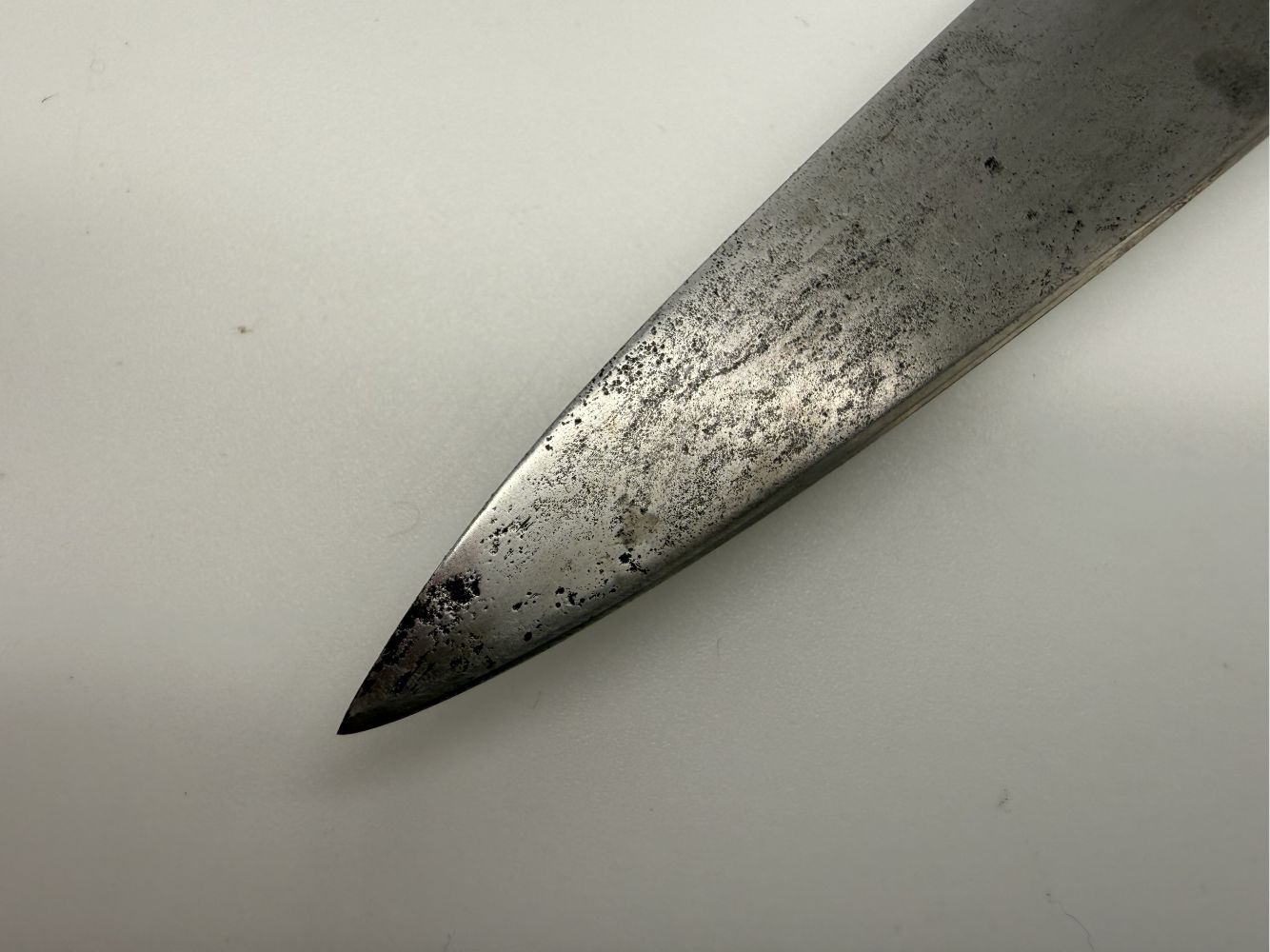
- Used knife.
- Minor surface corrosion removed, has residual scratches on blade
- Sharpening done natural Japanese stones, maintaining the original geometry of the master.


 LT
LT EN
EN ES
ES FR
FR DE
DE IT
IT RU
RU PL
PL PT
PT RO
RO NL
NL